
Trees of the Dead
So scary, these trees are literally petrified

To be honest with you, Reader, I sometimes struggled with what to say here. Life has been busy, sure, but it has also been breathtakingly cruel recently. When I get in my car, sometimes those short news bulletins from my local NPR station are enough to knock the wind out of me.
When sitting down to write, I often ask myself, what is important to know? What is important that people should hear? And a lot of times, I wasn’t confident enough that the answer was silly little wistful missives about trees, inter-connectivity, and the passage of time.
I’ve attacked this problem in several ways. But today, I do think that a silly little wistful missive might be nice. I hope you agree. If not, we can try again tomorrow.
I.
In September, my partner Brett and I went on a trip to Nova Scotia. A lot of it was what you’d hope and expect— rugged coastlines, lighthouses, pine trees. It was all very lovely and maritime.
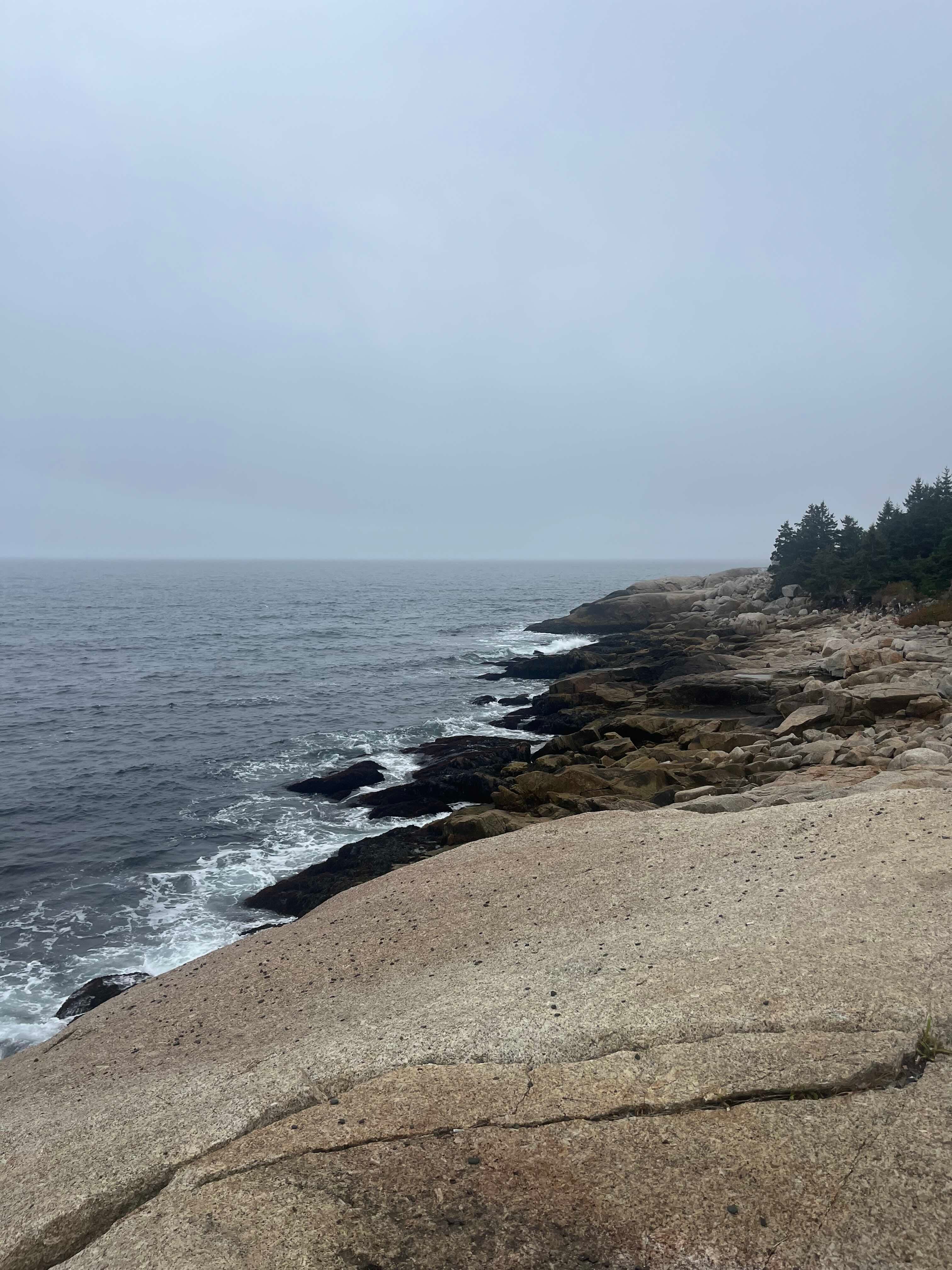
But the Canadian tree I want to talk to you about is this guy down here:
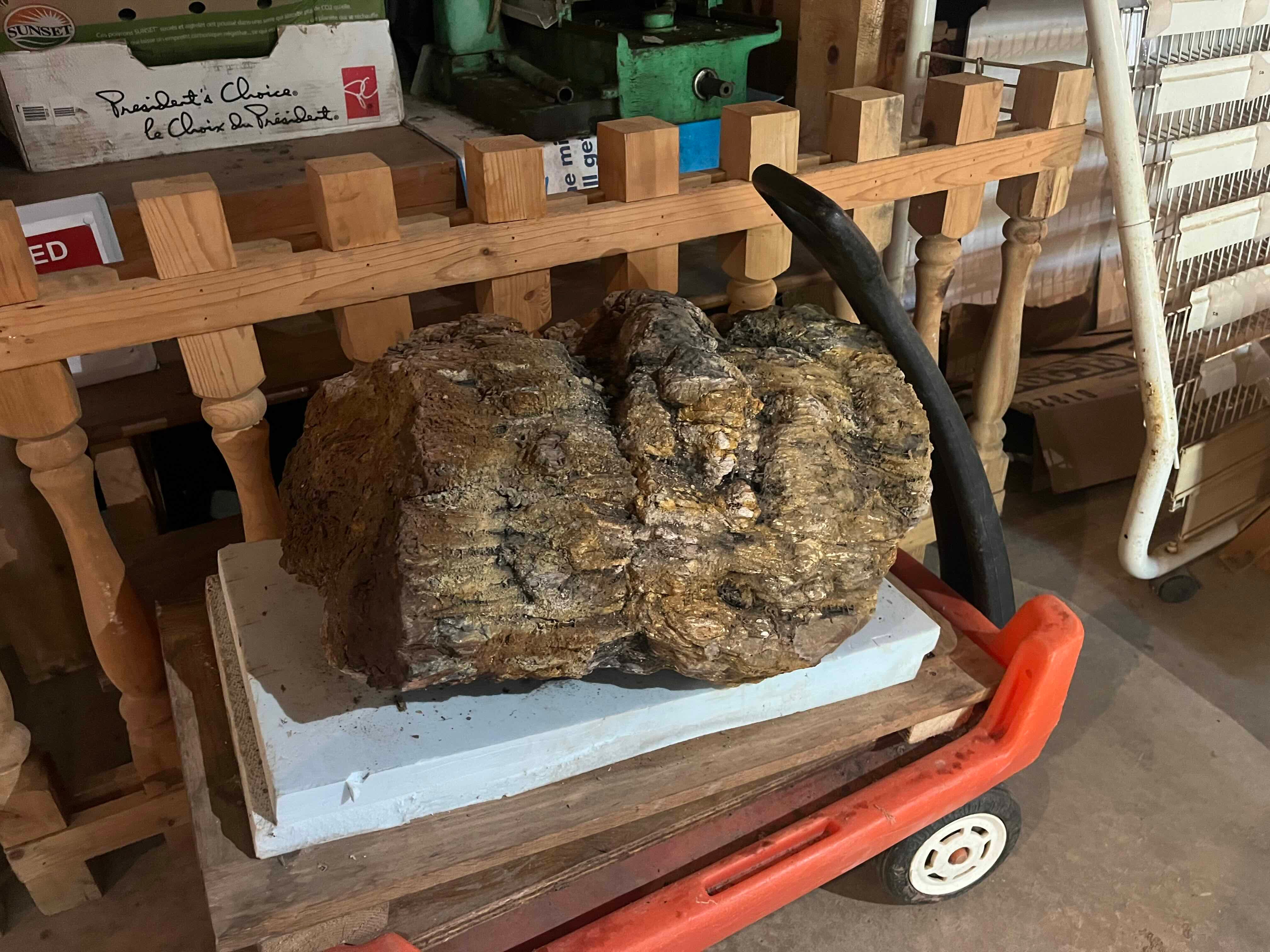
Yes, for all of you who guessed correctly, that is an ancient piece of petrified wood on a child’s wagon next to an empty box of President’s Choice soda. This curatorial vision was all thanks to the Blue Beach Fossil Museum in the bayside town of Hantsport.
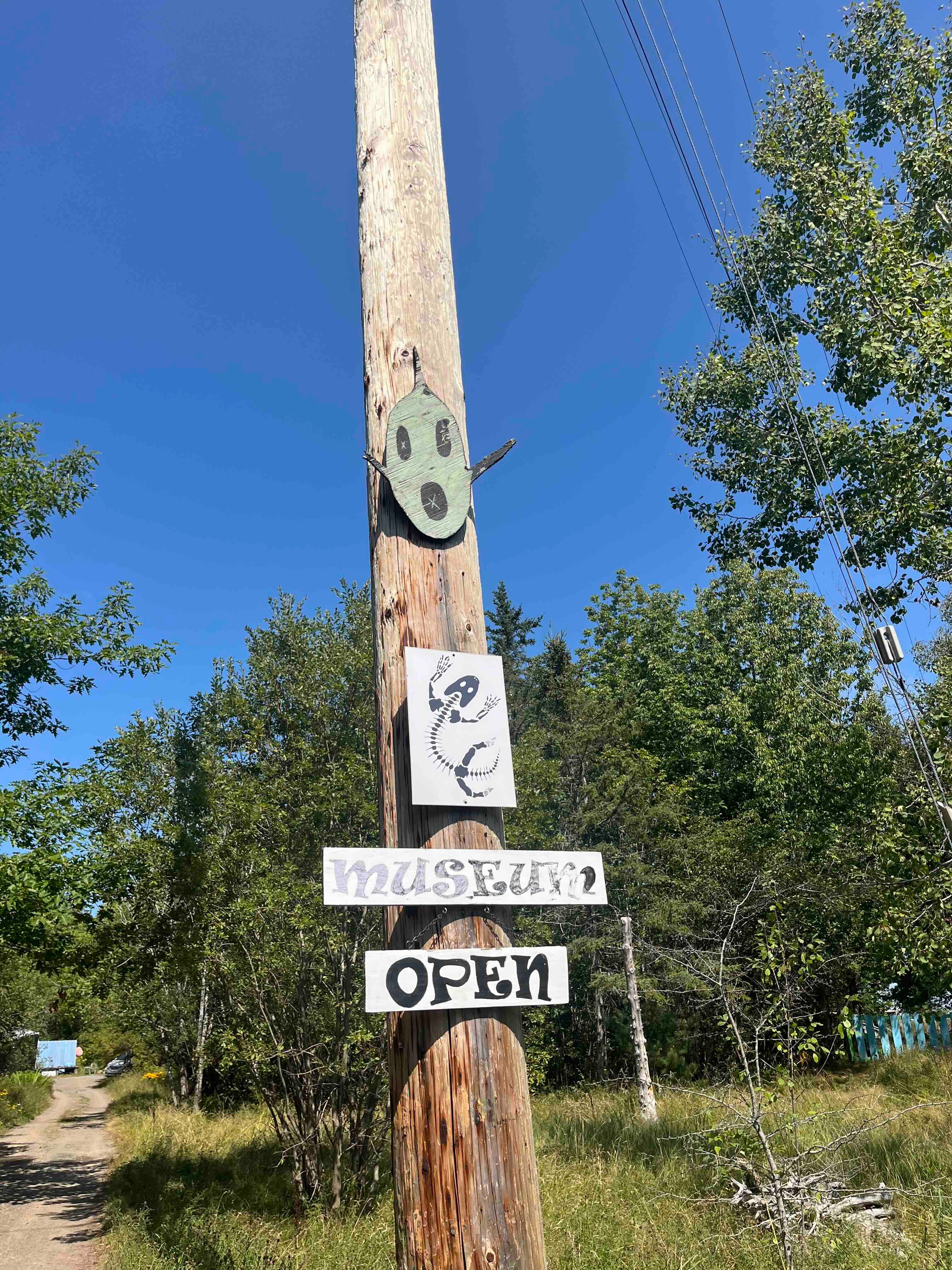
Blue Beach Fossil Museum is one of those museums that is less of a MUSEUM and more of a big room with a bunch of stuff and someone who knows a lot about a particular subject. It’s a great, weird spot!
The Bay of Fundy is a fossil hotspot because of this magical thing called tidal resonance. But that has nothing to do with the petrified wood. That particular piece was apparently procured through a deal the owner made with a “rock hound” in a parking lot. Its provenance is largely hearsay, and honestly, I don’t remember all the particulars.
However, it got me thinking about petrified wood.
II.
The whole process by which a piece of wood petrifies is fascinating stuff (at least to me & hopefully you). The bodies of animal, plant, and marine life are meant to decompose quickly and efficiently. The mineral world, however, works on a much grander timescale. Hence, fossils, often imprints, such as footprints, give us insight into plant and animal life much further in the past.
Petrified wood is different. Rather than imprinting, petrification creates a 3D representation or replacement. This process only occurs when trees are submerged in water or ash (typically from a volcano) and their oxygen source is cut off, slowing decomposition to a crawl.
Ash and the water are both mineral-rich and move through the wood and eventually, over incredibly long periods of time, break the wood down and replace the decaying parts with mineral deposits. That’s why petrified wood is always incredibly detailed, including the bark.
Eventually, all of the original tree matter is gone, and what remains is the petrified wood, which, if you think about it, is like a slow and detailed sculpture made using time and the sea or ash.
III.
There are examples of petrified wood as old as 390 million years, when the first known trees appeared on the earth. They can also be produced in as little as 100 years if the wood is submerged in the silica-rich waters of a hot spring.
Going to the fossil museum, I realized that I don’t know and have probably forgotten everything useful that I ever knew about fossils. But so much of our world and our landscape is shaped and powered by them. Human progress would look very different without coal, oil, and other fossils.
IV.
Dendrochronology (the study of figuring out how old a tree is) was invented by an astronomer. Or rather, a former astronomy student, Andrew Ellicott Douglass, who also excelled in biology.
While studying canals on Mars, Douglass wondered if solar flares or sunspots could affect Earth’s climate in a way that would be visible in tree rings. Or, as journalist Ross Anderson beautifully puts it, “He wondered if trees inscribed celestial events into their rings.”
It turns out he was right. Moments of intense solar activity are indeed recorded into the trunks of our trees. And not just that, the field helped scientists better understand and calibrate our carbon dating techniques.
I also hadn’t realized how new the field was. Douglass basically hard-launched the idea of Dendrochronology in an article for National Geographic in December 1929. The house I live in now is older than that.
The whole article is worth a read.
VI.
Dendrochronology, while very very cool, is also expensive and painstaking. Or at least that is what the guy at the fossil museum told me. So, for now, that hunk of petrified wood in Nova Scotia remains a mystery.
sources
What is Petrified Wood? How Does it Form?, Geology.com; Accessed Oct 21, 2026
Peanut Wood, Hobart M. King, PhD, Geology.com; Accessed Oct 21, 2026
Opalized Wood, Hobart M. King, PhD, Geology.com; Accessed Oct 21, 2026
The vanishing groves: A chronicle of climates past and a portent of climates to come – the telling rings of the bristlecone pine, Ross Andersen, Aeon; Accessed Oct 22, 2026